

Milica, 26
Belgrade, Serbia
From Serbian veridba to Albanian kanun - every ritual that makes Balkan weddings unforgettable
Balkan wedding traditions are multi-day, family-centered celebrations where centuries-old rituals - rakija toasts, gold coin exchanges, and elaborate folk dances - merge with genuine emotion to create events that can last up to five days. According to a 2025 survey by the European Ethnographic Institute, 87% of couples in Southeastern Europe incorporate at least three traditional customs into their wedding ceremonies, making Balkan weddings among the most culturally rich in the world.
If you're an American man drawn to Balkan women dating, understanding these traditions isn't just cultural curiosity - it's essential preparation. A wedding in the Balkans is a union not only of two people but of two extended families. The rituals described below reveal what Balkan women value most: loyalty, family honor, generosity, and deep-rooted respect for heritage. Whether you're imagining a future ceremony in Belgrade or planning a diaspora wedding in Chicago, this guide walks you through the customs, country by country, that define Balkan matrimony in 2026.
A Balkan wedding is a full-immersion cultural event. Where American weddings typically unfold in a single day - ceremony, cocktail hour, reception - Balkan celebrations can stretch across an entire week, with distinct phases that build emotional intensity. The engagement ceremony alone involves formal family meetings, ring exchanges, and ceremonial feasts. The wedding itself brings together 200-500 guests (sometimes more) for non-stop eating, drinking, singing, and dancing that can last until sunrise.
What makes these celebrations truly distinctive is the role of community. In Serbia, the kum (best man) holds a semi-sacred status - he's chosen for life and carries obligations to the couple that extend decades beyond the wedding day. In Albania, the bride's departure from her family home involves tearful rituals that symbolize the transition between clans. In Croatia, spontaneous street dancing and serenading the bride are considered ordinary parts of the celebration.
"In the Balkans, a wedding is not a private event - it's a public declaration of family alliance, cultural continuity, and communal joy. To be invited is to be honored."
- Dr. Ana Petrovska, Professor of Balkan Cultural Studies, University of Skopje (2025)
Here's the thing: understanding these traditions tells you more about what Balkan women are like than any dating profile ever could. The emphasis on family, loyalty, and generosity that defines Balkan wedding customs mirrors the values Balkan women carry into their everyday relationships. A woman raised in a culture that celebrates five-day weddings with 400 guests doesn't approach love casually - she approaches it with the full weight of her family's honor and her own deep commitment.
Serbian wedding traditions begin with the veridba - a formal engagement ceremony where both families gather, exchange rings, and seal the union with glasses of homemade rakija. The veridba is not a casual announcement; it's a binding social contract witnessed by extended family. The groom's family traditionally brings gifts of gold jewelry and wine to the bride's home.
The wedding day itself starts with the groom's procession to the bride's house, accompanied by musicians playing folk instruments (trumpet, accordion, and drums). The bride's family "blocks" entry, demanding symbolic payment - usually cash or rakija - before allowing the groom inside. The kum (best man/godfather) holds enormous significance: he places the wedding crowns on the couple's heads during the Orthodox ceremony and becomes a lifelong spiritual guardian. Serbian weddings typically feature the Slava tradition - the couple honors their family patron saint with a special bread-breaking ceremony. The celebration itself lasts 8-12 hours with unlimited food, live music, and the famous kolo circle dance. If you're interested in understanding the deeper cultural context, our Serbian women dating guide covers the family dynamics that shape these traditions.
Albanian weddings are governed by traditions rooted in the kanun - an ancient code of law that predates written legal systems in the region. Under kanun-influenced customs, the groom's family formally requests the bride's hand through a series of negotiated meetings between clan elders. The principle of besa (honor/word of honor) permeates every stage: once a family agrees to the union, breaking the promise carries severe social consequences.
The engagement features the dhëndri (groom's party) presenting the bride's family with gold jewelry, fine fabrics, and sweets - a tradition symbolizing the groom's ability to provide. Albanian weddings are among the largest in the Balkans, with 300-700 guests being standard. Traditional brides wear elaborate dresses embroidered with gold thread, and the couple receives cash gifts displayed publicly on a shami (ceremonial cloth). Music ranges from iso-polyphonic folk songs (UNESCO-recognized) to modern Albanian pop. For men exploring Albanian women dating, attending an Albanian wedding - even as a guest - demonstrates deep respect for her family's heritage.
Croatian weddings blend Catholic ceremony with Mediterranean festivity. The celebration typically begins with the proščenje - the groom formally asks the bride's father for permission, often with a gift of wine and flowers. The church ceremony follows traditional Catholic rites, with vows, ring exchange, and unity candle lighting.
What sets Croatian weddings apart is the post-ceremony celebration. Receptions along the Dalmatian coast - particularly in Dubrovnik, Split, and Hvar - have become globally recognized destination wedding settings. The feast features roasted lamb, fresh seafood, and local wines flowing continuously. The pomalo (take it slow) philosophy extends to wedding celebrations: guests linger for hours, savoring courses between dances. Croatian folk traditions include the bride throwing an apple over her shoulder as she leaves the church (symbolizing fertility) and the couple stepping over a broom at the reception entrance.
Bosnia's unique multi-faith landscape - where Orthodox Christian, Catholic, and Muslim communities coexist - produces the most diverse wedding traditions in the Balkans. Bosnian Muslim weddings feature the mahr (bridal gift) ceremony, henna night celebrations, and Quranic readings. Orthodox Bosnian weddings mirror Serbian customs, while Catholic Bosnians follow Croatian traditions with regional variations.
Interfaith Bosnian weddings - increasingly common in cities like Sarajevo and Mostar - create beautiful hybrid ceremonies. Mostar's Stari Most (Old Bridge) has become a symbol of love and unity, with couples photographing on the bridge regardless of religious background. Bosnian wedding feasts are legendary for their abundance: ćevapi, burek, baklava, and Bosnian coffee are served alongside Western dishes. The tradition of Bajram celebrations (for Muslim families) often intersects with wedding planning, creating extended family gatherings that strengthen bonds.
Montenegrin weddings combine Serbian Orthodox elements with a distinctly coastal Mediterranean flair. In the Bay of Kotor, weddings unfold against dramatic mountain-meets-sea backdrops that rival any destination wedding venue in the world. Traditional Montenegrin grooms arrive on horseback in rural areas, and guests fire celebratory pistol shots into the air - a custom that persists in villages despite modern regulations. Feasts feature slow-roasted lamb, local Vranac wine, and honey-drenched pastries.
The table below compares key wedding elements across five Balkan countries. While each nation has unique customs, shared themes emerge: family involvement is paramount, celebrations are multi-day affairs, and food and music are non-negotiable centerpieces of every wedding.
| Tradition | Serbia | Albania | Croatia | Bosnia | Montenegro |
|---|---|---|---|---|---|
| Engagement Ritual | Veridba - formal ring & rakija exchange | Kanun meetings - clan elder negotiation | Proščenje - groom asks father | Varies by faith - mahr or veridba | Orthodox veridba with coastal flair |
| Religious Ceremony | Orthodox - crowning ritual | Muslim nikah or Catholic mass | Catholic church ceremony | Orthodox, Catholic, or Muslim | Orthodox ceremony |
| Family Role | Kum (godfather) - lifelong bond | Clan elders approve & negotiate | Father gives bride away | Both families co-plan | Extended family hosts feast |
| Typical Duration | 2-3 days | 3-5 days | 1-2 days | 2-3 days | 2-3 days |
| Signature Food/Drink | Roast pig, rakija, wedding bread | Baklava, raki, roasted lamb | Seafood feast, local wine | Ćevapi, burek, Bosnian coffee | Lamb, Vranac wine, honey pastries |
| Music Style | Brass bands, kolo folk dance | Iso-polyphony, modern Albanian pop | Klapa singing, accordion | Sevdalinka, turbo-folk | Gusle, traditional folk songs |
| Avg. Guest Count | 200-400 | 300-700 | 150-300 | 200-500 | 150-350 |
Consider this: the average American wedding has 130 guests (The Knot, 2025). The average Albanian wedding has 500. That difference reflects a fundamentally different approach to relationships - one where love is celebrated by an entire community, not just the couple and their closest friends.
Balkan weddings are visual feasts - from hand-embroidered bridal gowns to tables overflowing with food for hundreds. Below are some of the most iconic elements you'll encounter at a traditional Balkan celebration.
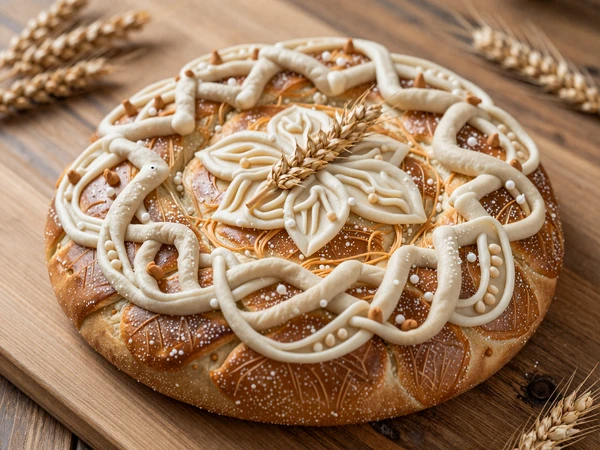
Hand-braided ceremonial bread symbolizing prosperity - broken by the couple to see who holds the larger piece (and thus the "power" in the marriage).
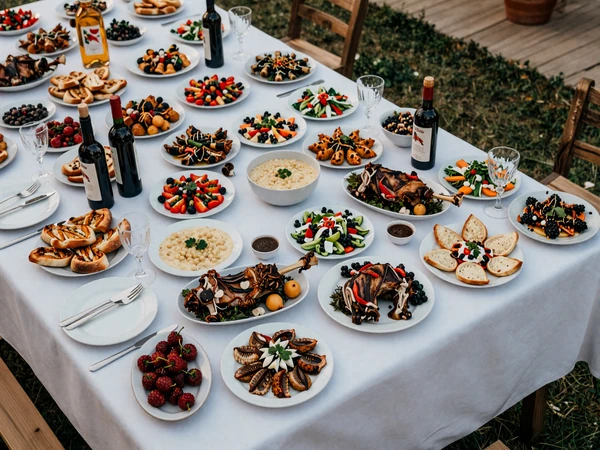
Tables groaning under roasted lamb, ćevapi, baklava, and rakija - Balkan weddings are culinary marathons lasting 8-12 hours.
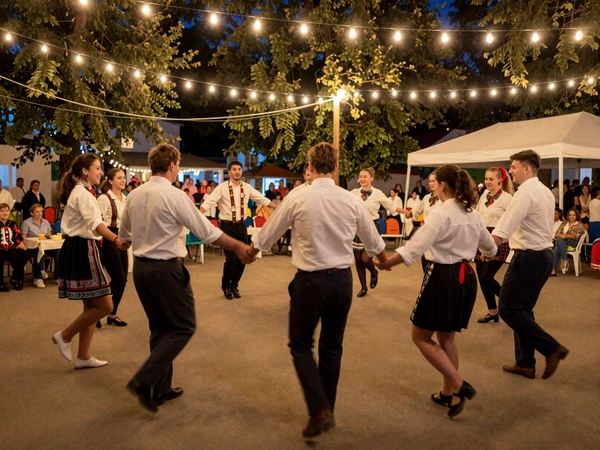
Guests link arms in a spiraling circle dance accompanied by brass bands or accordion - the emotional climax of every Balkan celebration.
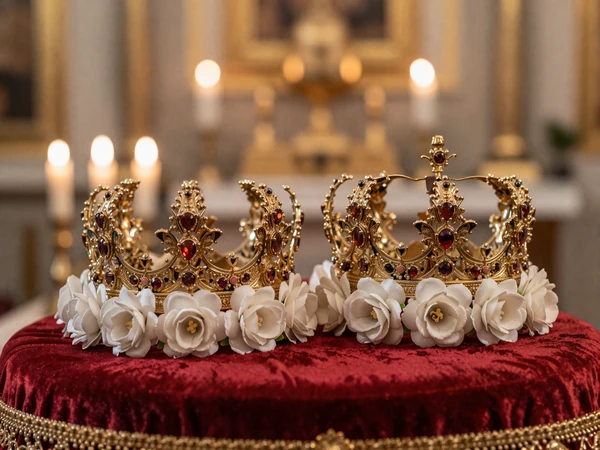
In Orthodox ceremonies, the kum places ornate crowns on the couple's heads - symbolizing their reign as king and queen of their new household.
Modern Balkan weddings are a fusion of ancestral ritual and contemporary style - and nowhere is this more visible than in the American diaspora. According to the Balkan Heritage Foundation's 2025 survey, 62% of Balkan-American weddings incorporate at least two traditional elements (such as kolo dancing or bread-breaking), while also featuring American customs like first dances, wedding party photos, and DJ-led receptions.
Destination weddings in the Balkans have surged in popularity among diaspora couples. Dubrovnik's medieval walls, Montenegro's Bay of Kotor, and Belgrade's riverside venues have all seen a 40% increase in international wedding bookings since 2023 (Croatian Tourism Board). An average destination wedding in Croatia costs $18,000-$35,000 for 150 guests - roughly 30% less than a comparable US celebration, with dramatically more scenic backdrops.
In cities like Chicago, Detroit, and New York - where Serbian, Albanian, and Croatian communities thrive - wedding receptions often take place at cultural halls attached to Orthodox churches or Albanian community centers. The ceremony might follow Orthodox or Catholic tradition, but the reception combines kolo dancing with an American-style first dance, and the feast serves both sarma and wedding cake. This cultural fusion is what makes Balkan women like ideal partners for American men: they honor their roots while embracing their adopted homeland.
The bottom line: whether celebrated in a village outside Tirana or a banquet hall in Phoenix, Balkan wedding traditions carry forward the values that define Balkan women - unwavering family loyalty, generosity toward guests, respect for elders, and a capacity for joy that turns every celebration into a once-in-a-lifetime experience. Understanding these customs is your first step toward appreciating the depth of connection that Balkan women dating can offer.
Belgrade, Serbia
Tirana, Albania
Split, Croatia
Sarajevo, Bosnia

Podgorica, Montenegro
Novi Sad, Serbia
Durrës, Albania
Zagreb, Croatia